
A hair transplant can work for curly and Afro-textured hair, but it calls for extra care and experience. The curl does not stop at the skin: the follicle curves underneath too, so taking it out intact is more delicate. On the plus side, curly hair often gives a fuller look from each graft, and the hairline can be shaped to suit the texture.
Here is what changes at each stage, from extraction to styling once the new hair has grown in.
Why is curly hair harder to transplant?
With straight hair, the follicle runs in a fairly straight line under the skin. With curly and Afro-textured hair, the follicle itself is curved, sometimes sharply.
That matters at extraction. With DHI (Direct Hair Implantation), each follicle is removed individually using a fine FUE punch. The surgeon cannot see the follicle’s path below the surface, so they judge it from the hair above the skin and from experience.
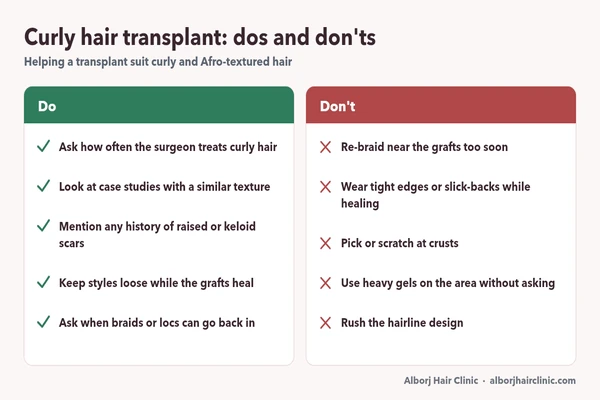
A follicle that is cut during extraction may not grow well. This is why experience with curly hair matters. Useful questions to ask a surgeon include:
- How often do you treat curly or Afro-textured hair?
- How do you adapt extraction for a curved follicle?
- Can I see case studies of patients with a similar texture?
Can curly hair look fuller after a transplant?
Often, yes. A graft, or follicular unit, contains about two to four hairs. Because curly hairs bend and coil, each one tends to cover more of the scalp than a straight hair of the same length.
That can mean a fuller look from each graft. It does not change how many follicles are available, though. The donor area at the back and sides of the head is still limited, so careful planning matters just as much.
Texture can also help the result blend. Curls naturally overlap, which can soften the line between transplanted and existing hair.
Cut length plays a part too. With a very close crop, the scalp shows through more. Mention how short you like to wear your hair when the plan is made.
How should the hairline be designed for curly hair?
A good hairline suits the face, the texture and the person’s heritage rather than following a single template. A shape that looks natural on straight hair can look out of place on Afro-textured hair.
Ask the surgeon to talk you through the shape, the height and how the edges will look. Edges matter here, because many people style them, so the front line needs to sit naturally with the way you wear your hair.
Think long term as well. Once settled, transplanted follicles normally go on growing for life. The original hair around them can still thin with age, and a careful design allows for that.
“Curly hair keeps its curve below the skin, so each extraction needs a steady, careful hand. When it is done well, the curl works in the patient’s favour, because each graft gives a fuller look.”
What else should you discuss before the procedure?
A few topics come up more often with curly and Afro-textured hair:
- Your scarring history. Some people form raised or keloid scars more easily. Tell your surgeon if you have ever had one.
- The cause of your hair loss. Tight braids, weaves or slicked-back edges worn for years can cause traction alopecia, or hair loss from constant pulling. A surgeon will check whether the loss has stopped before planning a transplant.
- Your styling habits. Explain how you usually wear your hair, so the plan fits your everyday routine.
- The look you want. Be specific, whether that is a sharper line under a fade, fuller temples or edges you can lay and style.
Pattern hair loss is staged with the Norwood scale for men and the Ludwig scale for women. The surgeon also checks the donor hair, because the whole plan depends on it.
How should you style and care for curly hair after a transplant?
Healing comes first and styling second. Avoid anything that pulls, presses or rubs on the treated area until your surgeon says it is fine.
- Hold off on braids, twists and locs. Re-styling near the grafts too soon can disturb them, so wait for your surgeon’s go-ahead.
- Skip tight styles at the edges. Tight ponytails and slick-backs put tension right where new hairs are growing.
- Go gently with products. Ask before using heavy gels, oils or edge control on the treated area.
- Cover loosely. Many clinics allow a loose hat or soft scarf after the first days, but follow your own surgeon’s instructions.
- Check before night wraps. Ask your clinic before wearing a bonnet or wrap to bed, since anything snug can press on fresh grafts.
Expect the transplanted hairs to shed in the early weeks. Regrowth usually begins at around three months, and the full result shows at around 12 months.
Because it is your own hair, it usually grows with the same texture as the donor area. Keeping styles looser at the hairline from then on helps protect both the new hair and your original hair. If braids or locs are part of your look, ask your surgeon how to wear them with less tension at the front.
About Alborj Hair Clinic
Alborj Hair Clinic is a hair transplant clinic in Mazaya Centre, Al Wasl, Dubai. Its surgeon, Dr Dimitrios Ziakas, has 24 years of experience and has performed more than 4,000 hair transplant procedures. He is a member of the International Society of Hair Restoration Surgery (ISHRS) and uses the DHI (Direct Hair Implantation) technique.
Before-and-after case studies can be viewed on the clinic’s website.
Frequently asked questions
Can people with Afro-textured hair have a hair transplant?
Yes, when the hair loss is stable and there is enough donor hair. A consultation shows whether it suits you.
Will transplanted curly hair stay curly?
It is your own hair, so it usually grows with the same texture as the donor area. Expect the curl pattern to match the hair at the back and sides of your head.
When can I braid my hair again?
It depends on how you heal. Your surgeon will tell you when braiding near the treated area is safe.
Can a transplant help with traction alopecia?
It can be an option once the pulling has stopped and the loss is stable. A surgeon will assess the scalp and donor hair first.
Busy schedules often involve walking between places, carrying personal essentials, and keeping both hands ready for daily tasks. Keeping important items close becomes easier with crossbody bags (斜背包),…

Selecting clothing made to personal measurements helps achieve a better appearance with enhanced confidence. A bespoke tailor in bangkok focuses on making clothing that matches body shape while supporting individual preferences. Rather than trusting on standard sizing, authorities study posture, proportions, and movement patterns. This method produces attire that sits correctly on the body. Every stage follows a clear process that improves accuracy, ensuring garments feel natural while presenting a polished look suitable for different occasions and personal requirements.
Precise Measurements Create Better Clothing Results
Accurate measurements form the foundation of a well-fitted garment. Skilled professionals assess body proportions carefully. Every dimension matters during planning. This attention helps clothing follow natural lines correctly while improving appearance, movement, and overall satisfaction for the wearer.
Personal Preferences Guide Design Direction
Individual style choices influence garment creation from the beginning.
- Designs reflect personal choices without greatly limiting flexibility.
- Selected details support a unique appearance for every wearer.
- Preferred elements create garments that closely match individual expectations.
- Style decisions influence construction throughout production stages carefully.
- Custom features improve satisfaction through thoughtful planning processes.
Fabric Selection Supports Lasting Garment Quality
Material choice plays an important role in garment construction. Different fabrics behave differently during wear. Specialists recommend suitable options based on purpose. Proper selection helps maintain structure, improves durability, and supports an attractive finished appearance over time.
Skilled Cutting Shapes Garments Correctly Always
Careful cutting ensures each piece aligns with planned measurements. Precision during this stage prevents fitting problems later. Professionals follow detailed patterns that support balanced proportions while allowing garments to sit naturally across different areas of the body.
Detailed Stitching Enhances Overall Garment Structure
Strong stitching contributes to durability and appearance. Skilled hands assemble fabric sections with attention to alignment. Consistent workmanship helps maintain shape while reducing issues related to uneven construction, resulting in clothing that performs reliably during regular use.
Multiple Fittings Improve Accuracy Throughout Production
Several fitting sessions allow adjustments before completion. Minor refinements can significantly improve results. Specialists evaluate how garments sit during movement, ensuring proportions remain balanced while addressing small concerns that may affect appearance or functionality later.
Professional Adjustments Refine Every Small Detail
Refinements help garments achieve a more polished finished look.
- Small modifications improve overall garment presentation significantly today.
- Careful corrections support proper alignment throughout completed pieces.
- Minor updates enhance structure while maintaining the intended design.
- Detailed review identifies areas requiring additional attention promptly.
- Precise improvements strengthen confidence in finished clothing quality.
Quality Checks Ensure Reliable Finished Pieces
Inspection procedures confirm garments meet expected construction standards.
- Thorough reviews verify workmanship before garment completion stages.
- Consistent checks support reliable results across every project.
- Construction details receive evaluation for improved lasting performance.
- Careful assessment helps maintain accuracy throughout production work.
- Final inspection confirms readiness before garment delivery occurs.
Proper measuring, suitable materials, structured assembly, and detailed evaluations work together to produce reliable outcomes. Individuals seeking garments that align closely with their proportions benefit from a process focused on precision somewhat than standard sizing. Picking a bespoke tailor in bangkok can provide a practical solution for achieving attire that looks refined, feels suitable during wear, and maintains strong presentation through consistent attention to every important detail.
When investing in designer pieces, you may think of handbags or runway looks, but luxury jewellery is another investment you should make. What is an outfit without jewellery?…
In today’s day and age, people are constantly looking for ways to increase their happiness levels. Whether it be through the purchase of material possessions or the execution…
In India, traditional textiles are more than just fabrics; they are woven legacies, each piece telling a story of rich heritage, artistry, and symbolism.…
Putting on Red Suits Like A Celebrity The mens red suit that you simply try can make you look like a hollywood, and you’ll…
The bride’s dressing-pattern should have that touch of sophistication, which make the lengthy run husband thrilled along with the audience pleased. Additionally, putting on…
The beauty industry changes very quickly now. New trends emerge in the styling world daily. You see salon owners seeking more control. Professional stylists want unique and powerful…